
Drama Therapy: A Psychological and Legal Approach to Supporting Behavioral Balance in Children
Drama Therapy is no longer viewed merely as a recreational artistic activity, but rather as a specialized psychological intervention tool that may contribute to reshaping children’s behavioral and emotional patterns. From this perspective, the International Federation for Child Rights and Defense (IFCRD) adopts an approach that integrates therapeutic dimensions with legal responsibility toward the child, ensuring that practice remains grounded in protection and sound professional standards.
First: Psychological Foundations and Therapeutic Mechanisms
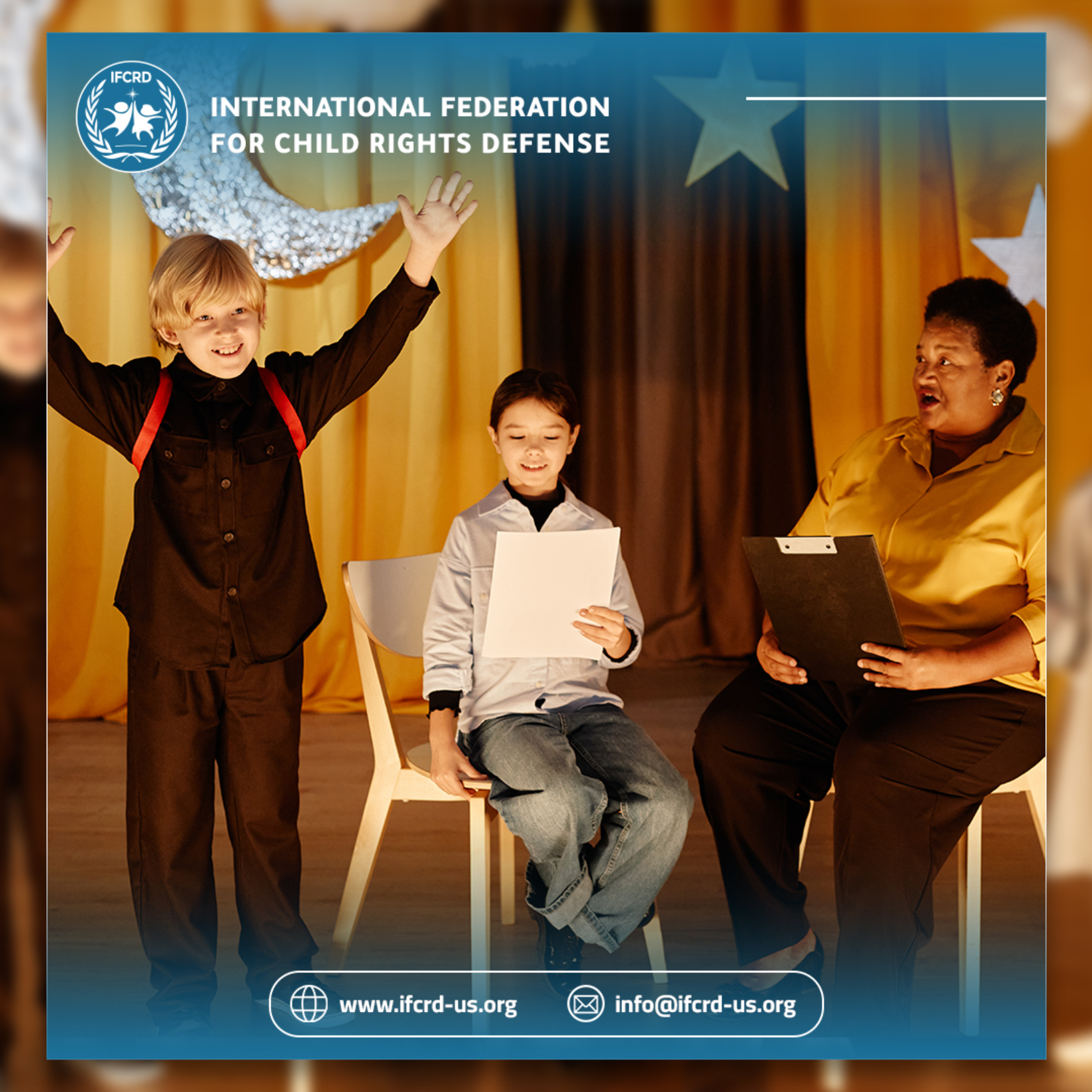
Drama Therapy is based on providing a safe space that allows children to express their experiences and emotions indirectly through role-playing and symbolic performance. This process relies on the principle of “Aesthetic Distance,” which enables the child to approach painful emotions without becoming fully overwhelmed by traumatic experiences again, in accordance with the professional principles adopted by the North American Drama Therapy Association (NADTA).
Emotional Catharsis
Dramatic performance helps children express suppressed emotions within a safe and structured framework, which may reduce tension and impulsive behaviors while transforming emotions into experiences that can be understood and processed.
Reconstructing Psychological Identity
Through embodying different characters, children experience new forms of self-expression, which may enhance self-confidence and help reduce the psychological effects associated with stressful environments or painful experiences.
Developing Social Skills
Drama Therapy provides an interactive environment in which children learn communication, cooperation, and empathy skills, in addition to practicing more peaceful methods of conflict resolution and expressing needs.
Second: Legal Responsibility and Child Protection
No therapeutic intervention directed toward children can be separated from the legal framework governing their rights and psychological safety. According to the Convention on the Rights of the Child (CRC, 1989), institutions bear the responsibility of providing safe environments that protect children from neglect, exploitation, or psychological harm, even when such practices occur under the umbrella of therapeutic or artistic activities.
This responsibility includes several essential obligations:
1. Informed Consent
Written consent from a parent or legal guardian should be obtained in accordance with applicable legal and regulatory requirements before involving a child in any drama therapy program. The nature of the sessions, their objectives, and implementation methods must also be clearly explained.
2. Protection of Privacy
Institutions are obligated to maintain the confidentiality of therapy sessions and children’s psychological data, and to prevent the therapeutic content from being used or circulated outside its designated professional framework.
3. Professional Competence and Prevention of Harm
Professional or legal liability may arise in cases of negligence or poor management of therapeutic interventions, particularly when specialized supervision is absent or when sensitive psychological cases are handled unprofessionally. Therefore, proper training and qualification of practitioners become essential conditions for ensuring child safety.
Third: Toward Sustainable Therapeutic Practice
The success of Drama Therapy is not achieved through freedom of expression alone, but through the ability of institutions to create a careful balance between creativity and psychological and legal protection.
This practice requires:
Monitoring and Documentation
Tracking children’s behavioral and emotional development through periodic reports that ensure continuous evaluation and transparency in professional performance.
Providing a Safe Environment
Creating psychological and physical spaces that respect the child’s dignity and protect them from bullying, pressure, or exploitation during the dramatic expression process.
💫 Conclusion
The integration of art into therapeutic pathways represents an important investment in supporting children’s psychological and social development. However, its effectiveness remains closely linked to adherence to professional and legal standards that safeguard children’s rights throughout all stages of intervention.
The International Federation for Child Rights and Defense (IFCRD) emphasizes that Drama Therapy is not a random emotional release process, but a specialized practice grounded in scientific and professional principles, employed to protect children, support their psychological balance, and strengthen their ability to express themselves safely.
📚 References
• Convention on the Rights of the Child (CRC, 1989).
• North American Drama Therapy Association (NADTA), Code of Ethics and Professional Conduct.