
The Right to Education as a Pillar of Human Security: Malala Yousafzai as a Model in Confronting Policies of Ignorance
The right to education constitutes the fundamental structural pillar that guarantees every child’s inherent dignity and enables them to exercise their other fundamental rights and freedoms. Education is not an intellectual luxury; it is a decisive instrument of empowerment that breaks the cycle of intergenerational poverty and protects children from exploitation and abuse. Nevertheless, global human rights indicators reveal a grim reality in which millions of children are forcibly deprived of access to education due to overlapping crises.
In this awareness report issued by the International Union for the Defense of Children’s Rights, we examine the philosophical and legal dimensions of the right to education while highlighting the inspiring journey of Pakistani child activist Malala Yousafzai, who confronted policies of ignorance and oppression through the power of words and peaceful resistance.
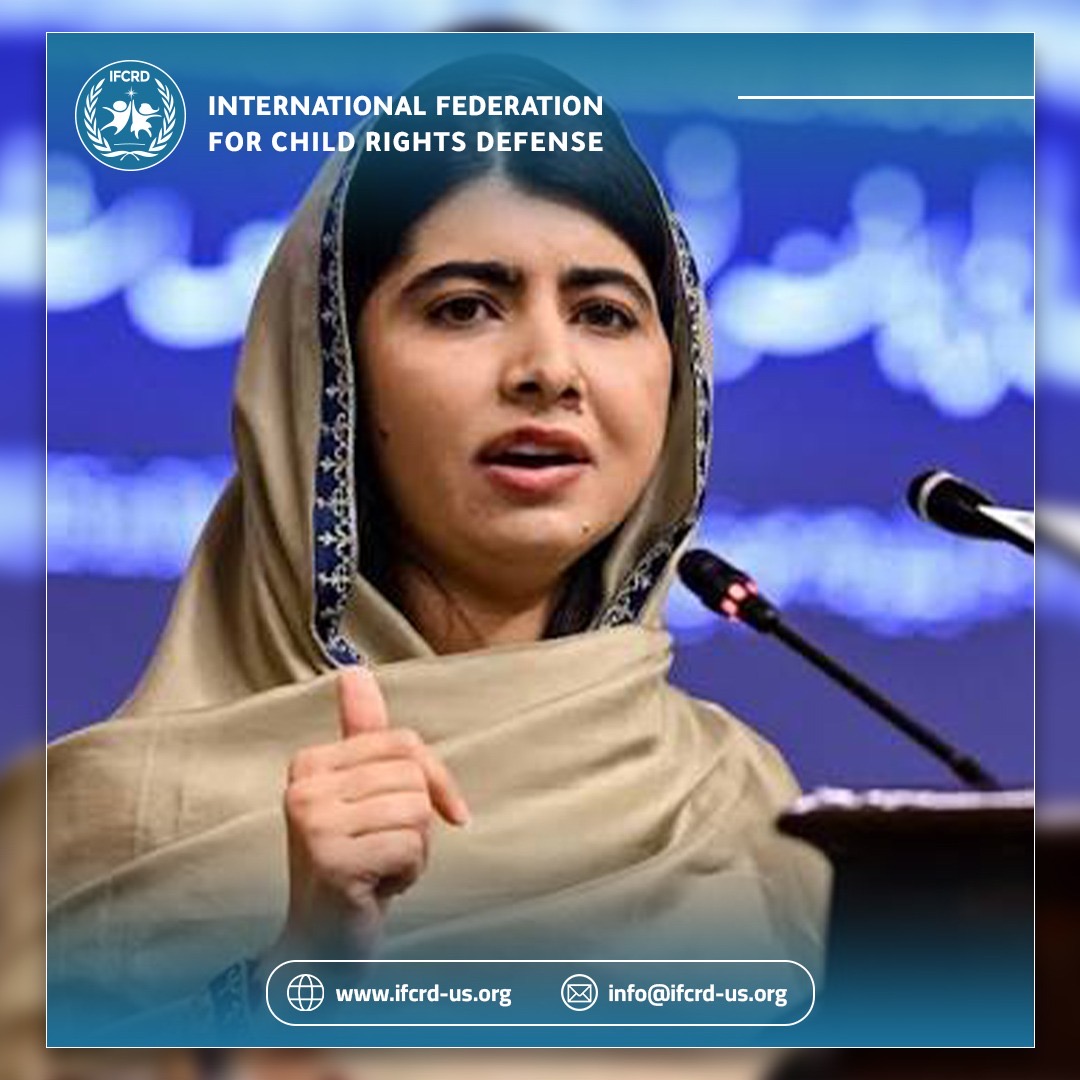
Profile: Malala Yousafzai at a Glance
Name and Background: Malala Yousafzai, born in 1997 in the Swat Valley, Pakistan.
Turning Point in Her Activism: Survived an assassination attempt in 2012 after publicly advocating for girls’ education.
International Recognition: The youngest recipient of the Nobel Peace Prize in history, awarded in 2014 at the age of 17.
Human Rights Motto: “One child, one teacher, one book, and one pen can change the world.”
Part I: The Human Rights and Legal Philosophy of Education
1. Education as a Tool for Empowerment and Sustainable Development
The determination to pursue education despite adversity distinguishes societies that advance from those trapped in the darkness of illiteracy. The strategic importance of education is reflected in several key dimensions:
🔹Breaking the Cycle of Poverty: Education equips children with knowledge and skills that improve their future opportunities and living standards while contributing to sustainable economic growth.
🔹 Building Awareness and Critical Thinking: Education protects children from violent extremism, manipulation, and economic or physical exploitation by strengthening their ability to think critically.
🔹 Promoting Gender Equality: Education provides girls with equal opportunities to demonstrate their abilities and actively participate in building inclusive and prosperous societies.
2. School Dropout: A Grave Human Rights Violation
The struggle to protect education extends far beyond building schools. One of the greatest challenges is combating school dropout, which constitutes a serious violation of internationally recognized human rights.
According to comprehensive studies conducted by independent human rights research institutions, more than 250 million children and young people worldwide remain completely outside the education system.
This crisis is particularly severe in areas affected by armed conflict and political instability. Children and girls are often forced into child labor, early marriage, or recruitment by armed groups. The emptying of classrooms in conflict zones represents a direct threat to human security, making sustained institutional and individual action essential to prevent an entire generation from being deprived of education.
3. The Legal Dimension Under International Law
From a legal perspective, education cannot be treated as an optional policy choice for governments. It is a binding legal obligation under Article 28 of the United Nations Convention on the Rights of the Child (CRC), which requires States to make primary education compulsory and free for all and to facilitate access to secondary education.
Likewise, attacks on schools or denying education to any group—particularly girls—constitute serious violations of international humanitarian law and may amount to crimes against humanity.
Part II: The Story of Malala Yousafzai’s Struggle
1. Confronting Prohibition with the Pen
In 2008, Pakistan’s Swat Valley underwent a dramatic transformation after the Taliban seized control and imposed a complete ban on girls’ education while systematically destroying schools.
At the age of eleven, in 2009, Malala began a remarkable form of peaceful resistance by secretly writing a diary for the BBC Urdu Service under the pseudonym “Gul Makai.”
Through her writings, she documented the fears experienced by girls in her community and exposed attacks on educational institutions. She courageously affirmed her unwavering commitment to her constitutional and legal right to education, declaring:
“They cannot stop me. I will get my education, whether at school, at home, or anywhere else.”
2. The Bullet That Awakened a Global Cause
As Malala’s public advocacy expanded following the revelation of her identity, she became a direct target of extremist groups determined to suppress education.
On 9 October 2012, at the age of fifteen, she survived an assassination attempt when an armed attacker shot her in the head while she was returning home on her school bus.
Malala was immediately transferred to the United Kingdom, where she received advanced medical treatment and underwent multiple complex surgeries.
Rather than silencing her message, the attack generated unprecedented international solidarity and transformed her personal tragedy into a global movement advocating for every child’s right to education without discrimination.
3. Institutional Leadership and the Nobel Peace Prize
Following her recovery, Malala moved beyond symbolic activism by establishing the Malala Fund, an international non-governmental organization dedicated to expanding girls’ access to education, reducing school dropout rates, and supporting children affected by conflict and displacement.
In recognition of her extraordinary commitment to defending children’s rights, Malala was awarded the 2014 Nobel Peace Prize at the age of seventeen.
Her achievement demonstrated that children’s voices, when given the opportunity to be heard, can influence international decision-makers and inspire meaningful reforms in global education policy.
Call to Action: A Message from the International Union for the Defense of Children’s Rights
Structural crises—including armed conflict, poverty, and deliberate policies of educational deprivation—can only be overcome through political commitment, effective legislation, and sustained action.
Accordingly, the International Union for the Defense of Children’s Rights calls upon governments and the international community to:
🔹Strengthen Legal Accountability: Criminalize all practices that contribute to school dropout, particularly child labor and child marriage.
🔹Enforce International Humanitarian Law: Ensure full protection of schools and educational institutions in conflict zones, recognizing them as civilian objects protected under international law.
🔹Provide Sustainable Educational Funding: Allocate adequate and long-term resources to support remedial and alternative education programs for displaced and refugee children, ensuring that no generation loses its right to learn.
📚References
* Inter-agency Network for Education in Emergencies (INEE): Annual assessment reports on illiteracy and school dropout resulting from armed conflict and humanitarian crises.
* United Nations Convention on the Rights of the Child (CRC): Article 28 and its Optional Protocols concerning the right to education.
* BBC News (2009): Archive of the original “Gul Makai” blog documenting life in Pakistan’s Swat Valley.
* Queen Elizabeth Hospital Birmingham (2012): Official medical statements and press releases regarding Malala Yousafzai’s treatment.
* Malala Fund: Annual strategic reports on girls’ education, school retention, and educational access in conflict-affected countries.
* The Nobel Foundation (2014): Official Nobel Peace Prize citation and Malala Yousafzai’s Nobel Lecture.