
From the Obedient Child to the Conscious Child: Building a Generation Capable of Critical Thinking and Community Participation
In traditional educational literature, the ideal child has long been associated with the extent of their obedience and absolute compliance with orders without discussion. However, contemporary challenges and successive humanitarian crises have proven that the planet does not just need a generation that “listens and executes,” but rather a generation that thinks, criticizes, and participates.
Shifting the child from the sphere of blind obedience to the space of alert awareness is the primary gateway to protecting their rights and building sustainable societies. When we grant a child space for critical thinking, we are not teaching them how to rebel; rather, we provide them with intellectual immunity, the ability to distinguish between right and wrong, and the courage to speak the truth in the face of crises.
Critical Thinking: The Child’s Invisible Weapon
Critical thinking is not merely an academic skill; it is a defensive mechanism for the child in times of both peace and war, encompassing three fundamental pillars:
* Continuous Questioning: Not accepting conditions and decisions as absolute facts without understanding their causes and motives.
* Community Participation: The child’s realization that they are an active part of their surroundings, and that their voice, opinion, and pen can make a real difference.
* Developing Rights Awareness: The child’s understanding of their rights and duties, which enables them to protect themselves and stand in solidarity with the rights of others.
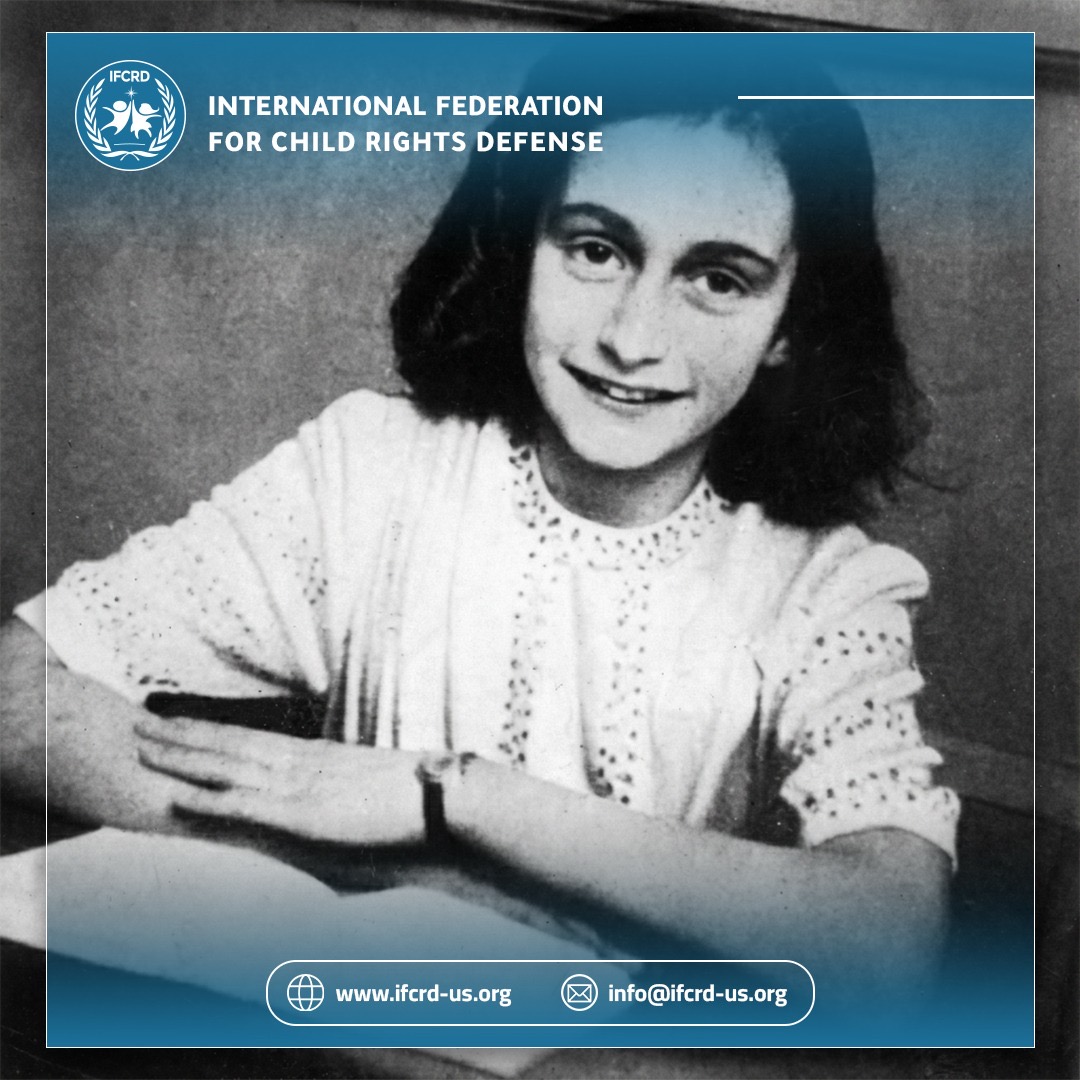
Perhaps human history has not found a living embodiment of the power of awareness and critical thinking in a child under the bleakest circumstances quite like the story of a girl who did not exceed fifteen years of age, yet her awareness made her an immortal voice across generations—the young girl, Anne Frank.
The Story of Anne Frank: Awareness Shifting into Revolution from Within the Secret Annex
Born in 1929, the German girl of Jewish descent, Anne Frank, lived an ordinary early childhood until the Nazi Party led by Hitler rose to power, initiating fierce waves of persecution and racial discrimination in Europe.
Fleeing from the brutality of arrest and death, Anne’s family was forced in 1942 to hide inside cramped secret rooms located behind her father’s office in Amsterdam, Netherlands. In this dark and dreary hiding place, Anne lived with her family in complete isolation and constant fear, with terror preventing them from making any sound throughout the daylight hours for fear of discovery.
Here, the turning point emerged; Anne was not just an obedient child surrendering to the status quo, but rather a conscious child possessing a mature critical mind.
On her thirteenth birthday, Anne received a small notebook, turning it into her sanctuary and her weapon. She began documenting her daily diary with astonishing accuracy and objectivity for her age. She did not settle for describing fear and hunger; rather, she expressed her reflections on war and racial discrimination, described their impact on her life, and discussed ideas about freedom, justice, and humanity. She wrote phrases reflecting a firm belief in community participation despite captivity, such as her famous quote:
“How wonderful it is that nobody need wait a single moment before starting to improve the world!”
In August 1944, an unknown betrayal led to the discovery of the secret annex by the Nazi police. Everyone was arrested and deported to concentration camps, where Anne Frank died in early 1945 due to illness and exhaustion, having not yet completed her fifteenth year.
The Impact and Immortality: The Pen that Shook the World
The child died, but her awareness did not. Her father (the sole survivor) found her diary and published it in 1947 under the title “The Diary of a Young Girl”. This book was subsequently translated into dozens of languages, becoming one of the most significant historical testimonies to the atrocities of war.
The story of Anne Frank is taught to the children of the world today to learn vital lessons:
1. A child’s body may be imprisoned, but their critical thinking and awareness remain free above all restrictions.
2. Community participation and expressing one’s opinion through the pen are real tools to resist ignorance and injustice.
3. Nurturing the “conscious child” is the only guarantee for building societies free from discrimination.
In this regard, the International Federation for the Defense of Child Rights affirms that child protection is not limited to providing physical safety and basic needs, but lies intrinsically in protecting the child’s mind and their inherent right to expression and constructive intellectual development.
The United Nations Convention on the Rights of the Child, particularly Article 12, asserts the child’s right to express their views freely in all matters affecting them, with these views being given due weight in accordance with their age and maturity.
Guided by this principle, the Federation renews its steadfast commitment and endorsement of the provisions of this international convention. It firmly believes that our true investment in protecting the future of human rights begins with dismantling the educational paradigm based on rote learning and transitioning toward a system that equips the child with the values of critique, questioning, and initiative. Through its intellectual, educational, and field programs, the Federation seeks to transform these inspiring stories into frameworks of action and application—empowering children and encouraging their active participation to become the leaders of change and the builders of peace in their communities today and tomorrow.
📚 References
1. United Nations (UN): International Convention on the Rights of the Child (1989) – Article 12 (The child’s right to express views and ensuring due weight is given to those views in accordance with age and maturity) and Article 29.
2. Anne Frank House: The official and documented historical archive of the diary’s life and the original manuscript copies (Amsterdam, Netherlands).
3. UNICEF: Reports on developing 21st-century skills and community participation for children and adolescents.
4. “The Diary of a Young Girl”: The full published text of Anne Frank, internationally approved and translated editions.