
The Child’s Voice on the Scale of Dialogue: From Presentation Skills to the Art of Persuasion
Introduction: Dialogue… A Language That Builds the Human Before It Persuades
Dialogue is not merely an exchange of words; it is a space for understanding the other before responding. It is the skill that moves a person from the world of “I see” to the world of “I understand.”
For a child, learning dialogue is not just about improving how they speak—it is about building their character from within: realizing that words can build or break relationships, and that listening is not silence, but an intelligent form of participation in understanding.
When a child learns dialogue early, they do not only learn how to speak, but how to belong to a world that has room for everyone.
First: Presentation Skills… When the Child Discovers Their Voice
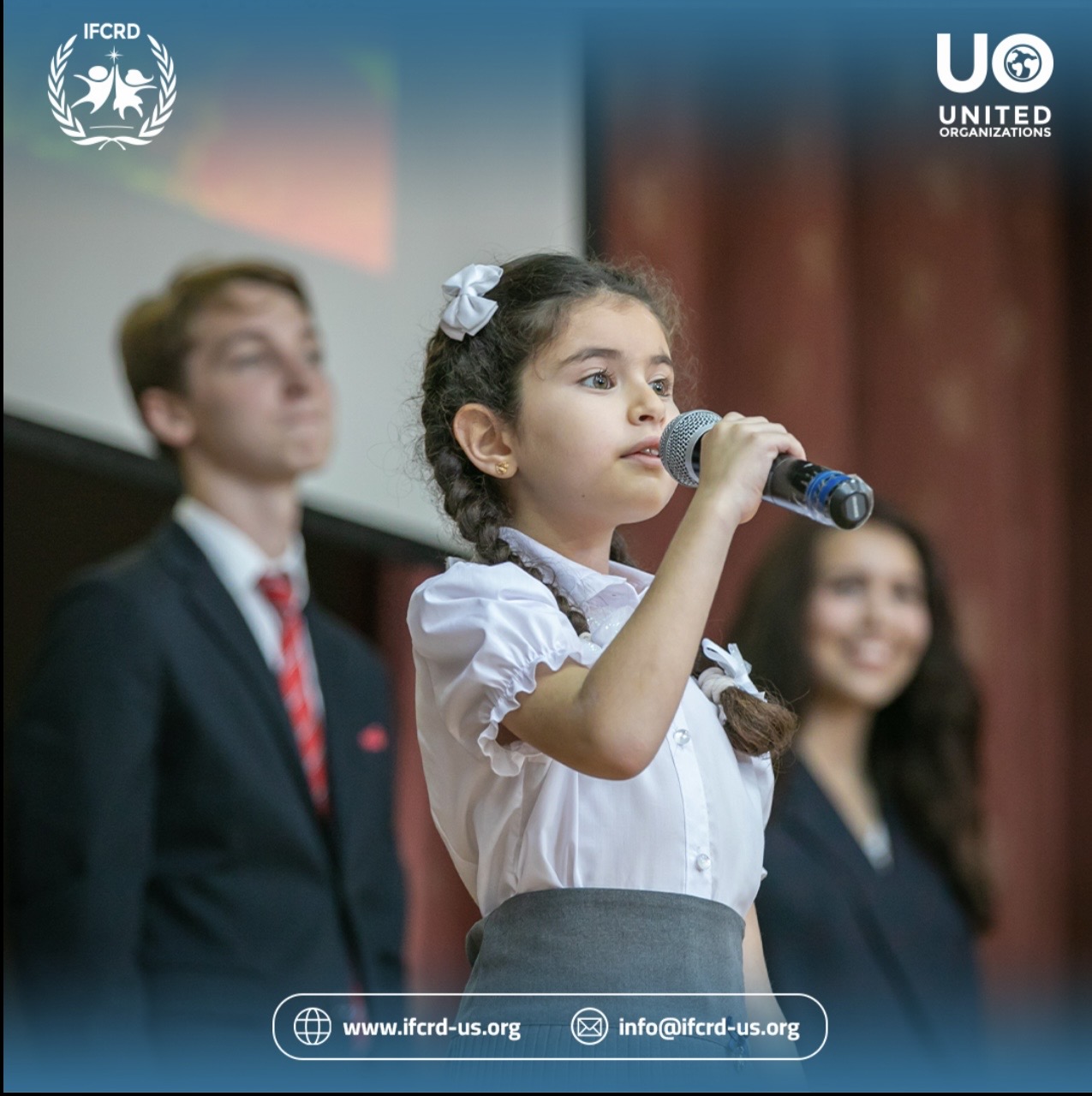
Before a child can persuade others, they must first come to terms with their own voice. Here, presentation skills begin as a tool for building confidence.
🔹 Mirror Exercise:
The child stands in front of a mirror and tells a short story or describes a daily situation.
The goal is not perfect performance, but to see themselves speaking, overcome tension, and grow comfortable with their presence in front of others.
🔹 Emotional Voice Game:
The child is asked to say the same sentence with different emotions: joy, surprise, sadness, or firmness.
This helps them discover that the voice is not fixed, but a flexible tool that carries meaning even before words.
🔹 Simple Recording Exercise:
Record the child’s voice or a short video, then listen/watch it together gently.
This helps the child notice their strengths without harsh criticism, and gradually build awareness of their expression.
Second: From Speaking to Persuasion… Building the Idea, Not Raising the Voice
Persuasion does not rely on the volume of the voice, but on the clarity and simplicity of the idea.
🔹 “I want… because…”
Encourage the child to connect their requests to a simple reason:
“I want this book because I want to learn drawing.”
This teaches them that every idea has a reason, and every request has logic.
🔹 Role Exchange:
During disagreements, ask the child to speak as if they were the other person.
This small step opens a wide door toward understanding different perspectives instead of rejecting them.
🔹 Simple Family Discussion:
Introduce a daily topic for family discussion, such as choosing an activity or a trip.
Here, the child learns that listening is part of strength, and that a smart response begins with good understanding.
Third: The Environment… Where Real Dialogue Is Born
A child’s skills do not grow in isolation—they need an environment that brings them to life.
- Genuine Listening:
The child feels that what they say matters, even if it is simple. Listening is not silence, but clear attention. - Respecting the Idea Before Correcting It:
Even if the child’s idea is incomplete, mocking it extinguishes their desire to express. Respect, on the other hand, opens the door to growth. - Calm Instead of Reactivity:
Teaching the child that raising their voice does not strengthen the idea—it weakens its impact. - Separating the Idea from the Person:
An idea can be discussed without attacking its owner—this is a key sign of intellectual maturity. - A Space for Opinion at Home:
Involving the child in simple decisions gives them a sense that their voice has real impact. - Choices Instead of Commands:
Instead of saying “Do this,” offer options:
“Do you prefer this or that?”
Here, the child begins to learn decision-making instead of merely receiving instructions.
Fourth: The Child’s Voice… From Expression to a Right
A child’s participation in dialogue is no longer just an educational value—it is a recognized right in international conventions, which emphasize the importance of hearing the child’s opinion in matters that concern them, in accordance with their age and maturity.
From this perspective, the modern vision of the International Federation for Child Rights and Defense (IFCRD) considers the child a partner in building their future, not merely a recipient of guidance. The child’s voice is not a secondary detail in society—it is an indicator of the maturity of the environment around them.
When this voice is taken seriously, it transforms from simple expression into genuine participation in decision-making.
✨ Final Recommendations
Dialogue is not a skill taught once, but a way of life cultivated in daily details.
Every word a child hears, and every way they are addressed, shapes how they will understand the world in the future.
What we plant today in their way of speaking… will return tomorrow in their decisions, relationships, and approach to life.
📚 References
- Convention on the Rights of the Child (CRC), Article 12
- Committee on the Rights of the Child, General Comment No. 12 (2009)
- Universal Declaration of Human Rights (UDHR), Article 19
- Syrian Child Rights Law No. 21 of 2021
- African Charter on the Rights and Welfare of the Child (ACRWC), Article 7