
Between the Authenticity of Identity and the Openness of Horizons: How Does Cultural Diversity Shape a Child’s Intellectual Resilience?
First: A World Painted in One Color… An Introduction to Understanding Diversity
Imagine if this vast world woke up one day with all its details painted in only one color, or if nature were stripped of the diversity of its seasons and flowers. Life would gradually lose its sense of wonder, and the scene would turn into a dull monotony devoid of vitality.
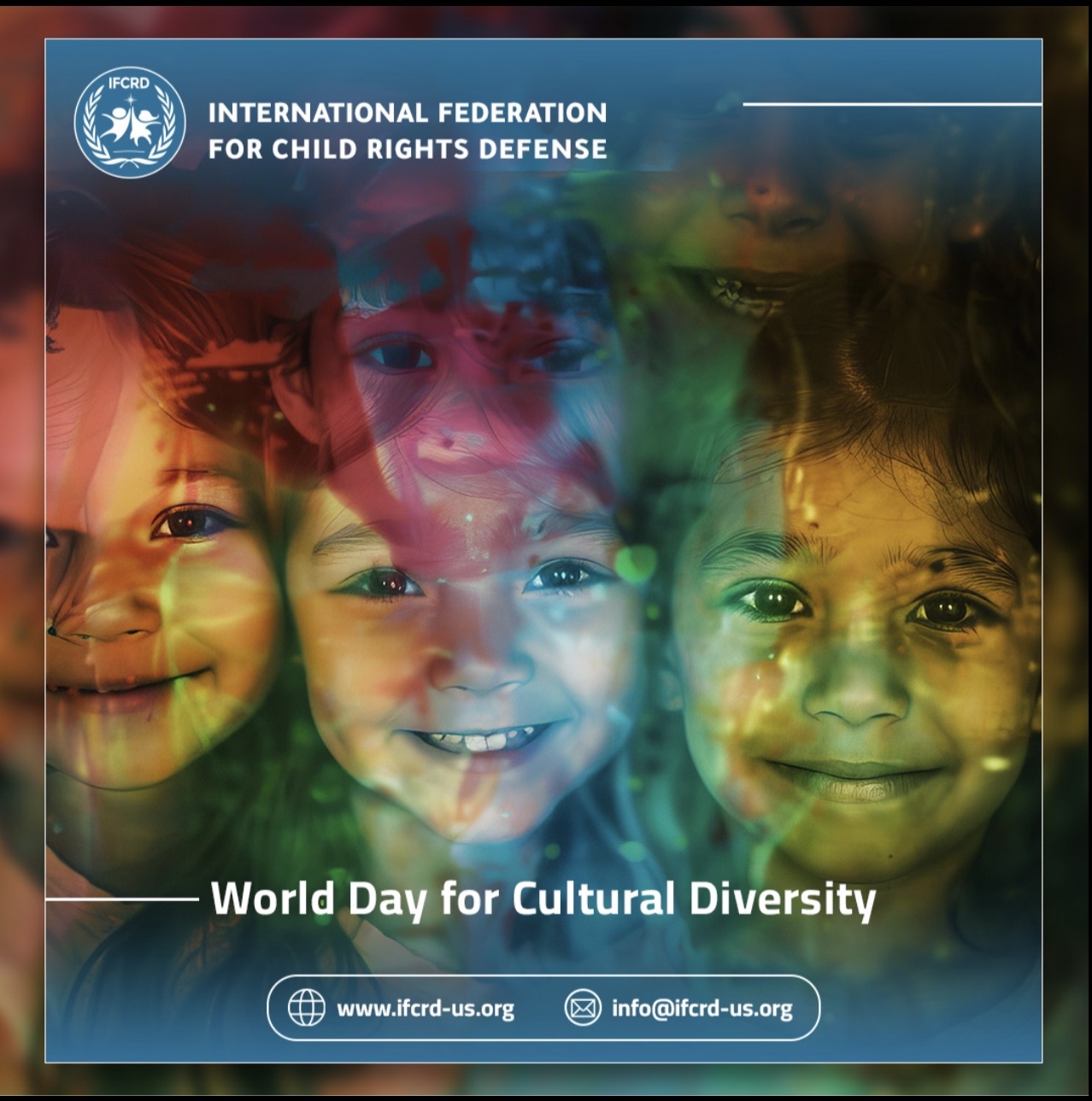
This simple image offers us an entry point to understanding human societies. Humanity was not created to be identical. Differences in customs, languages, lifestyles, and ways of thinking are not merely a cultural spectacle admired from afar; they are a vital space within which a child’s awareness, ability to think, make choices, and build independent decisions are formed.
At the International Federation for Child Rights and Defense (IFCRD), this human richness is viewed as one of the most important spaces that helps children understand themselves and build a more conscious and balanced relationship with the world.
Second: From Similarity to Integration… How Is the Picture Completed?
The essence of human diversity is rooted in a fundamental truth: distinction does not mean similarity, and human differences are not flaws that need to be erased, but rather energies that complete the human picture.
This diversity is reflected on two main levels:
🔹 Integration of Individual Abilities:
Every child is born carrying a unique imprint and a special talent. When children realize that their uniqueness is completed through the uniqueness of others, they gradually free themselves from comparison and selfishness, learning how to share their skills and benefit from the experiences of those around them. Balanced societies are not built through identical copies, but through integration, much like pieces of a mosaic whose beauty appears only when harmonized together.
🔹 Diversity of Professions and the Continuity of Life:
If we imagined a society in which all individuals worked in the same profession, the cycle of life would come to a halt and social and economic balance would collapse. The diversity of professions and interests is not incidental; it is a practical reflection of the diversity of experiences and knowledge that preserves societal balance and sustainable development.
Third: Educational Tools… How Do Our Children Deal with Differences?
For differences to become a space for integration rather than conflict, children need educational tools that help them manage relationships with awareness and maturity. Among the most important are:
🔹 Active Cognitive Listening:
Training children to listen to the stories and experiences of others with the aim of understanding and learning, away from mockery or preconceived judgments.
🔹 Cooperative Mutual Participation:
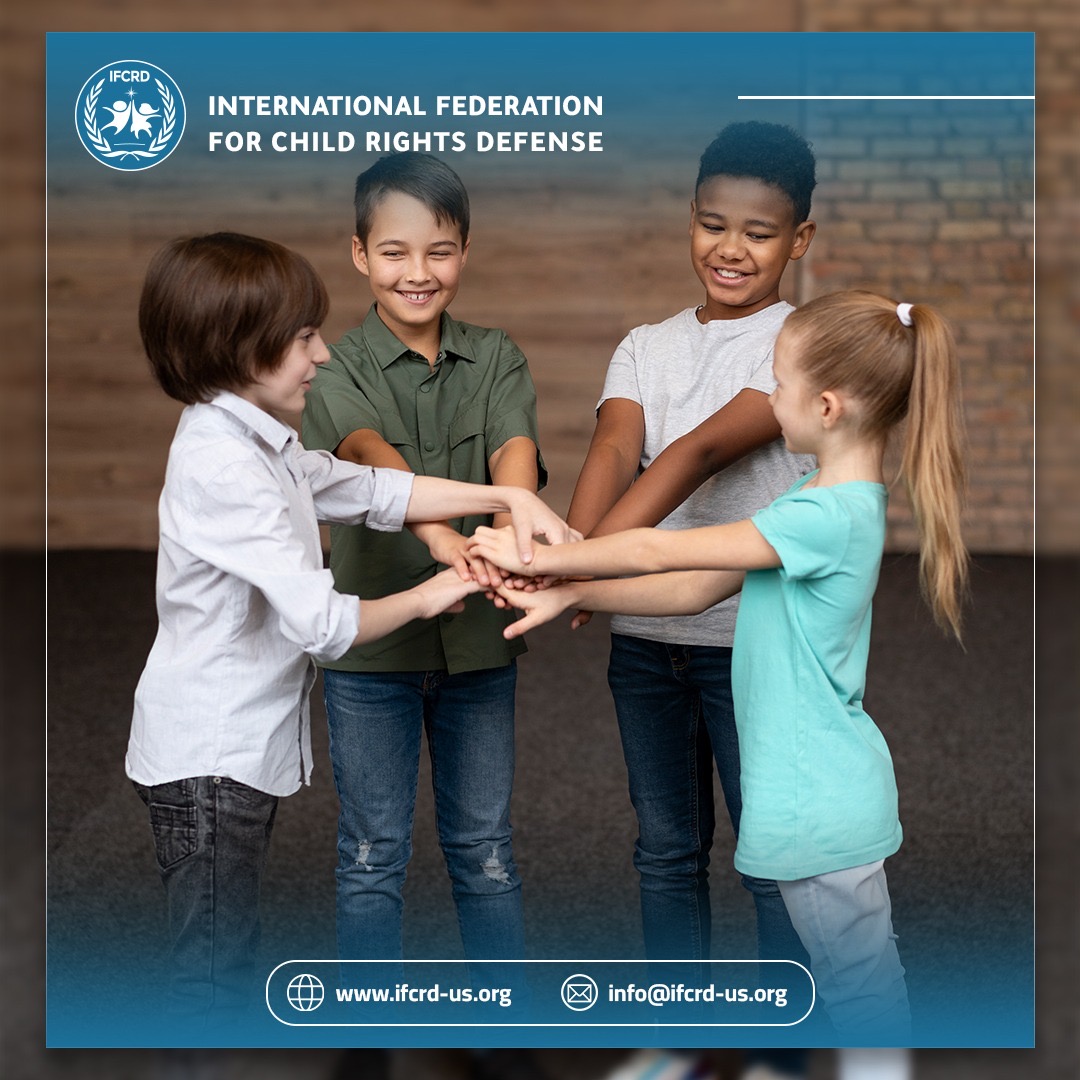
Engaging children in group activities with peers from diverse backgrounds, allowing them to experience genuine cooperation and exchange experiences in practice.
🔹 Searching for Shared Human Values:
Teaching children to focus on values that unite humanity — such as honesty, compassion, and cooperation — as a solid foundation for building balanced relationships that respect the uniqueness of every society.
Fourth: Intellectual Immunity and Digital Protection for Children
In the era of open digital spaces, geographical borders are no longer capable of isolating children from the ideas, values, and images flowing through screens. Here, understanding human diversity transforms from a social skill into a means of intellectual and psychological protection.
A child raised in an environment that respects and understands diversity develops a stronger ability to distinguish, analyze, and think critically, making them less vulnerable to confusion or unconscious absorption of cross-cultural content.
With this maturity, the child moves from a state of “passive protection,” based on prohibition and indoctrination, to a more conscious and independent state in which they can deconstruct media messages, analyze them critically, choose what aligns with their ethical values and authentic identity, and reject what threatens their intellectual or psychological stability.
Fifth: Our Commitment at the International Federation for Child Rights and Defense (IFCRD)
A child’s right to express their cultural identity and learn about the customs and experiences of other peoples without discrimination is an essential part of the protective and developmental environment affirmed by international conventions.
From this perspective, the Federation works to promote concepts of conscious openness, respect for differences, and the integration of abilities within its legal and educational programs, aiming to prepare a generation capable of communicating confidently with the world without losing its roots or critical awareness.
A child who understands the world in its diversity grows up less susceptible to hatred and more capable of building peace.
📚 References:
• UNESCO. Universal Declaration on Cultural Diversity. United Nations Educational, Scientific and Cultural Organization (UNESCO), 2001.
• United Nations. Convention on the Rights of the Child. United Nations, 1989.