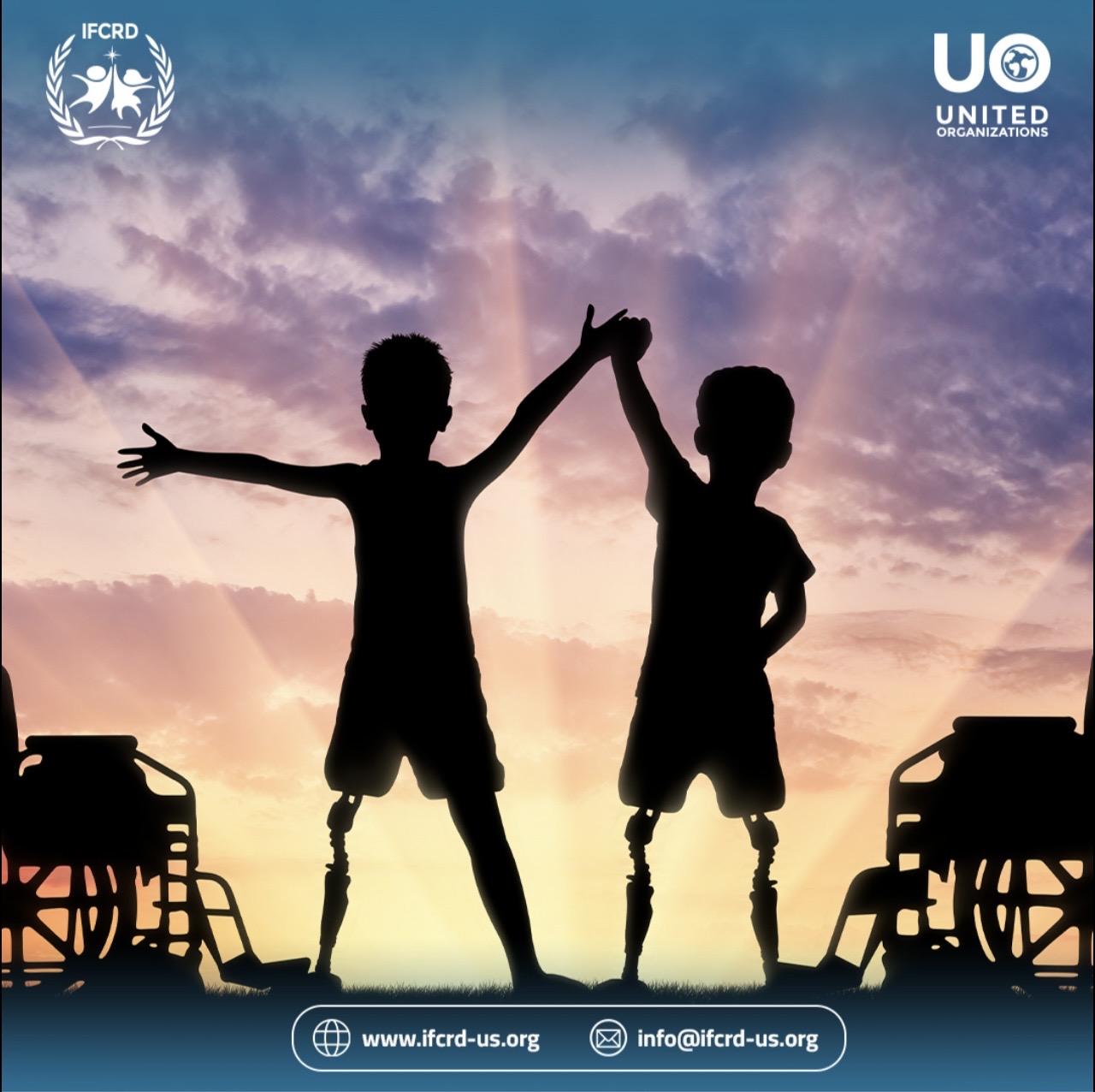

The Convention on the Rights of Persons with Disabilities: From “Charity” to “Legal Obligation”
Historically, the rights of persons with disabilities were viewed through a “welfare” or “charitable” lens, where assistance was offered as an act of compassion granted by society. This landscape changed fundamentally with the adoption of the Convention on the Rights of Persons with Disabilities (CRPD) in 2006, which moved the issue from the corridors of charity organizations to the forefront of binding international law.
At the International Federation for Child Rights and Defense (IFCRD), we believe that empowerment begins with recognizing a right—not expressing gratitude for a service.
1. The Philosophical Shift: From the Medical Model to the Social Model
Before 2006, the focus was on “fixing” the person medically. The Convention, however, adopted the social model, which affirms that “disability” does not reside in the individual, but in the environmental and attitudinal barriers that prevent full participation in society. Disability results from the interaction between an individual’s impairment and the obstacles created by the state or society. Therefore, states are legally obligated to remove these barriers—not merely provide medical treatment.
2. The Legal Foundations of the CRPD
The Convention is a comprehensive legal instrument that imposes strict obligations on signatory states, including:
- Non-discrimination: Prohibiting any exclusion or restriction based on disability (Article 5).
- Reasonable accommodation: Requiring institutions to adjust the surrounding environment to meet individual needs (such as providing sign language interpretation or wheelchair-accessible pathways).
- The right to independent living: Ensuring the inclusion of persons with disabilities in the community rather than isolating them in specialized institutions.
3. The Rights of Children with Disabilities: A Top Priority
Article 7 of the Convention contains explicit provisions concerning children—an area we prioritize within the Federation:
- Ensuring children with disabilities enjoy all human rights and fundamental freedoms on an equal basis with others.
- Upholding the “best interests of the child” as a primary consideration in all actions concerning them.
- Guaranteeing the child’s right to express their views freely in all matters affecting them, and providing age- and disability-appropriate assistance to exercise this right.
4. Monitoring and Accountability Mechanisms: Preventing Regression
What distinguishes this Convention from mere “honorary declarations” is the existence of the Committee on the Rights of Persons with Disabilities. This international body monitors states’ compliance through mandatory periodic reports.
Additionally, the Optional Protocol to the Convention on the Rights of Persons with Disabilities allows individuals or groups to submit complaints directly to the international committee if their rights are violated by a state, after exhausting domestic remedies. This transforms rights from paper promises into real legal tools in the hands of persons with disabilities and their advocates.
5. Current Challenges in 2026
Nearly two decades after the Convention’s adoption, a gap remains between legal texts and practical implementation—particularly in digital accessibility and ensuring technology is inclusive for all. Another major challenge lies in transforming mainstream schools into inclusive environments that embrace all abilities without exception.
Legal References:
- Convention on the Rights of Persons with Disabilities:
CRPD, G.A. Res. 61/106 (2006). - General Comment No. 6 on Equality and Non-Discrimination:
CRPD/C/GC/6 (2018). - Optional Protocol to the Convention on the Rights of Persons with Disabilities:
A/RES/61/106/Add.1 (2006).